Leo E. Strine, Jr.
Education
- University of Delaware, B.A. 1985, summa cum laude, Phi Beta Kappa, Truman Scholar
- University of Pennsylvania Carey Law School, JD 1988, magna cum laude, Order of the Coif
Clerkships
Honorable Walter K. Stapleton, U.S. Court of Appeals for the Third Circuit, 1989–1990
Honorable John F. Gerry, U.S. District Court for the District of New Jersey, 1988–1989
Leo E. Strine, Jr.
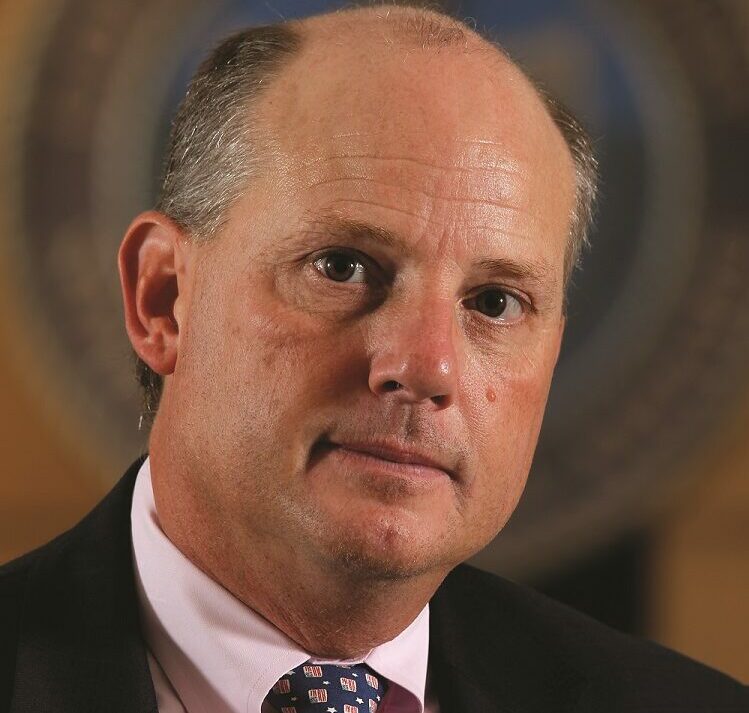
Leo E. Strine, Jr., is Of Counsel in the Corporate Department at Wachtell, Lipton, Rosen & Katz. Prior to joining the firm, he was the Chief Justice of the Delaware Supreme Court from early 2014 through late 2019. Before becoming the Chief Justice, he served on the Delaware Court of Chancery as Chancellor since June 22, 2011, and as a Vice Chancellor since November 9, 1998.
In his judicial positions, Mr. Strine wrote hundreds of opinions in the areas of corporate law, contract law, trusts and estates, criminal law, administrative law, and constitutional law. Notably, he authored the lead decision in the Delaware Supreme Court case holding that Delaware’s death penalty statute was unconstitutional because it did not require the key findings necessary to impose a death sentence to be made by a unanimous jury.
For a generation, Mr. Strine taught various corporate law courses at the Harvard and University of Pennsylvania law schools, and now serves as the Michael L. Wachter Distinguished Fellow in Law and Policy at the University of Pennsylvania Carey Law School and a Senior Fellow of the Harvard Program on Corporate Governance. From 2006 to 2019, Mr. Strine served as the special judicial consultant to the ABA’s Committee on Corporate Laws. He also was the special judicial consultant to the ABA’s Committee on Mergers & Acquisitions from 2014 to 2019. He is a member of the American Law Institute.
Mr. Strine speaks and writes frequently on the subjects of corporate and public law, and particularly the impact of business on society, and his articles have been published in The University of Chicago Law Review, Columbia Law Review, Cornell Law Review, Duke Law Journal, Harvard Law Review, University of Pennsylvania Law Review, and Stanford Law Review, among others. On several occasions, his articles were selected as among the Best Corporate and Securities Articles of the year, based on the choices of law professors.
Before becoming a judge in 1998, Mr. Strine served as Counsel and Policy Director to Governor Thomas R. Carper, and had also worked as a corporate litigator at Skadden, Arps, Slate, Meagher & Flom from 1990 to 1992. He was law clerk to Judge Walter K. Stapleton of the U.S. Court of Appeals for the Third Circuit and Chief Judge John F. Gerry of the U.S. District Court for the District of New Jersey. Mr. Strine graduated magna cum laude from the University of Pennsylvania Law School in 1988, and was a member of the Order of the Coif. In 1985, he received his Bachelor’s Degree summa cum laude from the University of Delaware and was a member of Phi Beta Kappa and a Truman Scholar.
In 2000, Governor Carper awarded Mr. Strine the Order of the First State. In 2002, President David Roselle of the University of Delaware presented him with the University’s Presidential Citation for Outstanding Achievement. In 2006, he was selected as a Henry Crown Fellow at the Aspen Institute. In 2019, he was awarded an honorary degree from Washington College in Chestertown, Maryland.
**Admitted in Delaware.
Select Publications
- Business Court Best Practices: Constructive Thoughts on the Challenging Work of Effective Commercial and Corporate Law Adjudication,
Texas A&M School of Law Second Annual Corporate Law Symposium, February 17, 2026.
- The Call of Conscience and the Current Moment: A Reflection Honoring William T. Allen and John L. Weinberg,
University of Delaware Weinberg Center for Corporate Governance’s Occasional Paper Series No. 2502, November 2025.
- Making Brazil Even More Beautiful for Business: Thoughts On Improving Brazil’s System For Resolving Major Corporate And Commercial Disputes,
FGV-Direito – Conference on Business Courts and the Adjudication of Business Disputes, November 11, 2025.
- Steady On: Toward Principled, Sustainable Corporate Leadership Addressing the Reality of Human-Caused Climate Change,
2025 Colum. Bus. L. Rev. 833 (2025)
- Rebalancing Retirement: How 401(k) Plans Exacerbate Inequality and What We Can Do About It,
30 Stan. J.L. Econ. & Bus. 401 (2025).
- Confronting AI’s Ethical Mirror Test,
49 J. CORP. L. DIGIT. 101 (2025).
- Using Experience Smartly to Ensure a Better Future: How the Hard-Earned Lessons of History Should Shape The External and Internal Governance of Corporate Use of Artificial Intelligence,
50 J. CORP. L. 1265 (2025).
- Ignorance is Strength: Climate Change, Corporate Governance, Politics, and the English Language,
5 J.L. & Pol. Econ. 170 (2025).
- Minutes Are Worth the Minutes: Good Documentation Practices Improve Board Deliberations and Reduce Regulatory and Litigation Risk, Given as the 21st Annual DeStefano Lecture,
29 Fordham J. Corp & Fin. L. 561 (2024).
- The Delaware Inspired Next Step Toward Brazil Becoming The South American Leader In Corporate Law: Making Public Company Arbitrations a Matter of Public Record,
13:1 American University Business Law Review (AUBLR) 89 (2024).
- Stakeholder Capitalism’s Greatest Challenge: Reshaping a Public Consensus to Govern a Global Economy,
47 Seattle U. L. Rev. 329 (2024).
- Good Corporate Citizenship We Can All Get Behind?: Toward A Principled, Non-Ideological Approach To Making Money The Right Way,
78 BUS. LAW. 329 (2023).
- Optimizing the World’s Leading Corporate Law: A 20-Year Retrospective and Look Ahead,
77 Bus. Law. 321 (Spring 2022).
- The Win-Win That Wasn’t: Managing to the Stock Market’s Negative Effects on American Workers and Other Corporate Stakeholders,
1 U. Chi. L. Rev. 307 (2022).
- Corporate Political Spending Is Bad Business,
Harv. Bus. Rev (Jan.-Feb. 2022).
- Duty and Diversity,
75 Vand. L. Rev. 1 (2022).
- Lifting Labor’s Voice: A Principled Path Toward Greater Worker Voice and Power Within American Corporate Governance,
106 Minn. L. Rev. 1325 (2022).
- Restoration: The Role Stakeholder Governance Must Play in Recreating a Fair and Sustainable American Economy – A Reply to Professor Rock,
76 Bus. Law. 397 (2021).
- Stewardship 2021: The Centrality of Institutional Investor Regulation to Restoring a Fair and Sustainable American Economy,
24 U. PA. J. Bus. L. 1 (2021).
- Toward Fair and Sustainable Capitalism,
Roosevelt Institute, Working Paper (Aug. 13, 2020).
- Caremark and ESG, Perfect Together: A Practical Approach to Implementing an Integrated, Efficient, and Effective Caremark and EESG Strategy,
106 Iowa L. Rev. 1885 (2021).
- Toward Fair Gainsharing and a Quality Workplace for Employees: How a Reconceived Compensation Committee Might Help Make Corporations More Responsible Employers and Restore Faith in American Capitalism,
76 Bus. Law. 31 (2020-2021).
- Development on a Cracked Foundation: How the Incomplete Nature of New Deal Labor Reform Presaged Its Ultimate Decline: A Response to Cuéllar, Levi, and Weingast,
57 Harv. J. on Leg. 67 (2020).
- Fiduciary Blind Spot: The Failure of Institutional Investors to Prevent the Illegitimate Use of Working Americans’ Savings for Corporate Political Spending,
97 Wash. U. L. Rev. 1007 (2020).
- Citizens United as Bad Corporate Law,
2019 Wis. L. Rev. 451.
- Made for this Moment: The Enduring Relevance of Adolf Berle’s Belief in a Global New Deal,
42 Seattle U. L. Rev. 267 (2019).
- Fiduciary Principles and Delaware Corporation Law: Searching for the Optimal Balance by Understanding that the World is Not,
Oxford Handbook of Fiduciary Law (2018).
- Delaware’s Constitutional Mirror Test: Our Moral Obligation to Make the Promise of Equality Real: A Reflection on the Resegregation of Our Schools,
17 Del. L. Rev. 97 (2018).
- Perfectly Frank: A Reflection on Quality Lawyering in Honor of R. Franklin Balotti,
72 Bus. Law. 603 (2017).
- Corporate Power is Corporate Purpose I: Evidence from My Hometown,
33 Oxford Rev. Econ. Pol’y 176 (2017).
- Corporate Power is Corporate Purpose II: An Encouragement for Future Consideration from Professors Johnson and Millon,
74 Wash. & Lee L. Rev. 1165 (2017).
- Who Bleeds When the Wolves Bite?: A Flesh and Blood Perspective On Hedge Fund Activism and Our Strange Corporate Governance System,
126 Yale L.J. 1870 (2017).
- Corporate Power Ratchet: The Court’s Role in Eroding “We The People’s” Ability to Constrain Our Corporate Creations,
51 Harv. C.R.-C.L. L. Rev. 423 (2016).
- Criminal Justice and (a) Catholic Conscience,
56 Santa Clara L. R. 631 (2016).
- Lessons For Luxembourg: Are Delaware and the Netherlands Examples You Can Emulate?,
Cent Ans de Droit Luxembourgeois des Societies [A Century of Luxembourg Company Law] 375 (2016).
- Originalist or Original: The Difficulties of Reconciling Citizens United with Corporate Law History,
91 Notre Dame L. Rev. 877 (2016).
- Securing Our Nation’s Economic Future: A Sensible, Nonpartisan Agenda to Increase Long Term Investment and Job Creation in The United States,
71 Bus. Law. 1081 (2016).
- The Siren Song of Unlimited Contractual Freedom,
Research Handbook on Partnerships, LLCS, and Alternative Forms of Business Organizations (2015).
- The Soviet Constitution Problem in Comparative Corporate Law: Testing the Proposition that European Corporate Law is More Stockholder-Focused Than U.S. Corporate Law,
89 S. Cal. L. Rev. 1239 (2016).
- A Job Is Not a Hobby: The Judicial Revival of Corporate Paternalism and Its Problematic Implications,
41 J. Corp. L. 71 (2015).
- The Dangers of Denial: The Need for a Clear-Eyed Understanding of the Power and Accountability Structure Established by the Delaware General Corporation Law,
50 Wake Forest L. Rev. 761 (2015).
- Documenting The Deal: How Quality Control And Candor Can Improve Boardroom Decision-making And Reduce The Litigation Target Zone,
70 Bus. Law. 679 (2015).
- Conservative Collision Course?: The Tension Between Conservative Corporate Law Theory And Citizens United,
100 Cornell L. Rev. 335 (2015).
- Making It Easier For Directors To “Do The Right Thing”?,
4 Harv. Bus. L. Rev. 235 (2014).
- Can We Do Better By Ordinary Investors? A Pragmatic Reaction To The Dueling Ideological Mythologists Of Corporate Law,
114 Colum. L. Rev. 449 (2014).
- Putting Stockholders First, Not the First-Filed Complaint,
69 Bus. Law. (2013) 1.
- Poor Pitiful or Potently Powerful Preferred?,
161 U. Pa. L. Rev. 2025 (2013).
- “Old School” Law School’s Continuing Relevance for Business Lawyers in the New Global Economy: How a Renewed Commitment to Old School Rigor and the Law as a Professional and Academic Discipline Can Produce Better Business Lawyers,
17 Chapman L. Rev. 137 (2013).
- Our Continuing Struggle with the Idea That For-Profit Corporations Seek Profit,
47 Wake Forest L. Rev. 135 (2012).
- Delaware Corporate Law and the Model Business Corporation Act: A Study in Symbiosis,
74 Law and Contemp. Probs. 107 (Winter 2011).
- The Role Of Delaware In The American Corporate Governance System, And Some Preliminary Musings On The Meltdown’s Implications For Corporate Law,
in Corporate Governance: Current Issues and the Financial Crisis 67 (Wilco Oostwouder & Hans Schenk eds., 2011) (Written and Presented in Final Form at the Governance of the Modern Firm Conference (Dec.13, 2008)).
- One Fundamental Corporate Governance Question We Face: Can Corporations Be Managed for the Long Term Unless Their Powerful Electorates Also Act and Think Long Term?,
66 Bus. Law. 1 (2010).
- Loyalty’s Core Demand: The Defining Role of Good Faith in Corporation Law,
98 Geo. L. J. 629 (2009).
- The Story of Blasius Industries v. Atlas Corp.: Keeping the Electoral Path to Takeovers Clear,
in Corporate Law Stories, Chapter 9 (J. Mark Ramseyer ed., 2009).
- Breaking the Corporate Governance Logjam in Washington: Some Constructive Thoughts on a Responsible Path Forward,
63 Bus. Law. 1079 (2008).
- Human Freedom and Two Friedmen: Musings on the Implications of Globalization for the Effective Regulation of Corporate Behaviour,
58 U. Toronto L.J. 241 (2008).
- Toward Common Sense and Common Ground? Reflections on the Shared Interests of Managers and Labor in a More Rational System of Corporate Governance,
33 J. Corp. L. 1 (2007).
- Toward a True Corporate Republic: A Traditionalist Response to Bebchuk’s Solution for Improving Corporate America,
119 Harv. L. Rev. 1759 (2006).
- The Delaware Way: How We Do Corporate Law and Some of the New Challenges We (and Europe) Face,
30 Del. J. Corp. L. 673 (2005).
- When the Existing Economic Order Deserves a Champion: The Enduring Relevance of Martin Lipton’s Vision of The Corporate Law,
60 Bus. Law. 1383 (2005).
- If Corporate Action Is Lawful, Presumably There Are Circumstances in Which It’s Equitable To Take That Action: The Important Corollary to the Rule of Schnell v. Chris-Craft,
60 Bus. Law 877 (2005).
- The New Federalism of the American Corporate Governance System: Preliminary Reflections of Two Residents of One Small State,
152 U. PA. L. Rev. 953 (2003).
- “Mediation-Only” Filings in the Delaware Court of Chancery: Can New Value Be Added by One of America’s Business Courts?,
53 Duke L.J. 585 (2003).
- Judge “The Game by the Rules”: An Appreciation of the Judicial Philosophy and Method of Walter K. Stapleton,
6 Del. L. Rev. 223 (2003).
- Should I Serve? Useful Considerations for Prospective Directors Deciding Whether To Join a Board and Incumbents Pondering Whether to Continue,
Corp. Governance Advisor, Jan./Feb. 2003, at 1.
- The Professorial Bear Hug: The ESB Proposal as a Conscious Effort To Make the Delaware Courts Confront the Basic “Just Say No” Question,
55 Stan. L. Rev. 863 (2002).
- Derivative Impact? Some Early Reflections on the Corporation Law Implications of the Enron Debacle,
57 Bus. Law. 1371 (2002).
- The Social Responsibility of Boards of Directors and Stockholders in Change of Control Transactions: Is There Any “There” There?,
75 S. Cal. L. Rev. 1169 (2002).
- The Great Takeover Debate: A Meditation on Bridging the Conceptual Divide,
69 U. Chi. L. Rev. 1067 (2002).
- Realigning the Standard of Review of Director Due Care with Delaware Public Policy: A Critique of Van Gorkom and Its Progeny as a Standard of Review Problem,
96 NW. U. L. Rev. 449 (2002).
- The Inescapably Empirical Foundation of the Common Law of Corporations,
27 Del. J. Corp. L. 499 (2002).
- Delaware’s Corporate-Law System: Is Corporate America Buying an Exquisite Jewel or a Diamond in the Rough? A Response to Kahan & Kamar’s Price Discrimination in the Market for Corporate Law,
86 Cornell L. Rev. 2157 (2001).
- Function Over Form: A Reassessment of Standards of Review in Delaware Corporation Law,
56 Bus. Law. 1287 (2001).
- Categorical Confusion: Deal Protection Measures in Stock-For-Stock Merger Agreements,
56 Bus. Law. 919 (2001).
- My Random Observations on Advocating Before the Government,
Del. Lawyer, Fall 1999, at 21.
Select Op Eds
- Preparing for Activism After it Arrives is Too Late, in the Daily Journal, December 6, 2023
- Board Practices in the Digital Era: Using Corporate Governance to Maximize the Benefit-to-Cost Ratio of Information Technology, in Directors & Boards, May 23, 2022
- What Milton Friedman Missed About Social Inequality, in The New York Times, September 10, 2020.
- Remembering What Comes First is More Important Than Ever, in Financial Times, March 27, 2020.
- Toward Racial Equality: The Most Important Things the Business Community Can Do, in Columbia Law School’s Blog on Corporations and the Capital Markets, November 2, 2020.
- How to Fight Resegregation and Inequality in Our Schools, in Delaware Online, September 28, 2017.
- Why Excessive Risk-Taking Is Not Unexpected, in N.Y. Times Dealbook, October 5, 2009.
- Warning — Potential Danger Ahead! A Business Judge’s Starting List of Yellow Flags for the Conscientious Independent Director, in Directors & Boards, Third Quarter 2004.